When disaster strikes, whether it’s a sudden flood, a house fire, or a severe storm, your whole world can feel like it’s been turned upside down in an instant. If you are reading this because you and your family have been displaced, the first thing we want you to know is this: You are not alone, and this is not the end of your story.
At Family ReBuild of New Jersey, we see the strength in our South Jersey community every single day. We know that our neighbors, especially our vibrant Black families in Burlington County and beyond, are resilient. But even the strongest people need a helping hand when the unexpected happens. Navigating the paperwork, the phone calls, and the emotional weight of displacement is a lot for anyone to handle.
This guide is designed to be your roadmap. We’re going to walk through exactly what you need to do, who you need to call, and how we can work together to get your family back into a safe, stable home.
Step 1: Safety and Immediate Shelter
The moments immediately following a disaster are often the most chaotic. Your primary goal is ensuring that you, your children, and your elders are safe and have a warm place to sleep tonight.
If you are in immediate danger, please call 911. For immediate disaster-related needs like emergency shelter, food, or medicine, your first call should be to the American Red Cross at 1-800-RED-CROSS. They operate 24 hours a day and are experts at setting up temporary housing for families who have lost everything.
In South Jersey, we take care of our own. Don’t hesitate to reach out to local shelters or even your local church or community center. Many times, these organizations have immediate resources that can bridge the gap for the first 48 hours.

A friendly volunteer in a bright vest handing a warm blanket and a bottle of water to a Black mother and her young son, both of whom are looking relieved and safe.
Step 2: Understanding Federal Disaster Declarations
Once the immediate danger has passed, it’s time to look at the bigger picture of recovery. In New Jersey, help often depends on whether a "Federal Disaster Declaration" has been made.
Why does this matter? Because a federal declaration unlocks a massive amount of funding and support from FEMA (the Federal Emergency Management Agency) and the SBA (Small Business Administration).
You can check for active declarations in your specific county by visiting the tools on nj.gov/disasterhelp. If your area is covered, you become eligible for a variety of grants and low-interest loans that are specifically designed to help families rebuild.
Step 3: Navigating the "Big Three" Assistance Programs
When you're displaced, the sheer number of acronyms can be overwhelming. Let’s break down the three main pillars of support you’ll likely interact with:
1. FEMA (Federal Emergency Management Agency)
FEMA is the heavy hitter when it comes to individual assistance. They can provide grants (money you don't have to pay back) for:
- Rental Assistance: Money to pay for a place to stay while your home is being repaired.
- Home Repairs: Funds to help make your home safe, sanitary, and functional.
- Other Needs: This covers things like medical expenses, moving and storage costs, or replacing essential household items.
How to apply: Visit nj.gov/disasterhelp or call (800) 621-3362. If you prefer speaking to someone in person, look for a local Disaster Recovery Center (DRC) in South Jersey.
2. SBA (U.S. Small Business Administration)
Don't let the name fool you, the SBA isn't just for businesses. They provide low-interest disaster loans to homeowners and renters. These loans are often the primary source of money for long-term recovery, helping you replace personal property or repair your home beyond what insurance or FEMA covers.
3. NJ 2-1-1
This is a lifesaver for finding community-based resources. By dialing 2-1-1, you can speak with a real person who can point you toward local food pantries, clothing closets, and even legal help. They are the "connectors" of our state, and they are available 24/7.

A Black father sitting at a kitchen table with a laptop, looking determined as he navigates the FEMA application website, with a supportive Family ReBuild volunteer standing nearby offering guidance.
Step 4: Local South Jersey Resources That Care
While federal programs are great, sometimes you need the local touch. South Jersey has an incredible network of organizations dedicated to making a difference.
- Community Food Bank of New Jersey: They ensure that no displaced family goes hungry.
- Catholic Charities South Jersey: They offer a wide range of services, from emergency financial assistance to trauma counseling.
- Family ReBuild of New Jersey: We are right here in the heart of the community. Our mission is to help NJ families rebuild with joy and purpose. We believe in treating every family with the dignity and respect they deserve. Whether it’s through our events or direct advocacy, we want to see you thrive.
You can check out our latest news to see how we are currently active in the community or find ways to get involved yourself once you’re back on your feet.
Step 5: Document Everything
It sounds tedious, but your future self will thank you. As soon as it is safe to do so:
- Take Photos: Take pictures of all damage to your home and belongings.
- Keep Receipts: Keep every single receipt for hotel stays, meals, and emergency supplies.
- Track Communications: Keep a notebook of every person you talk to at FEMA, your insurance company, or the Red Cross. Note the date, the time, and what was promised.
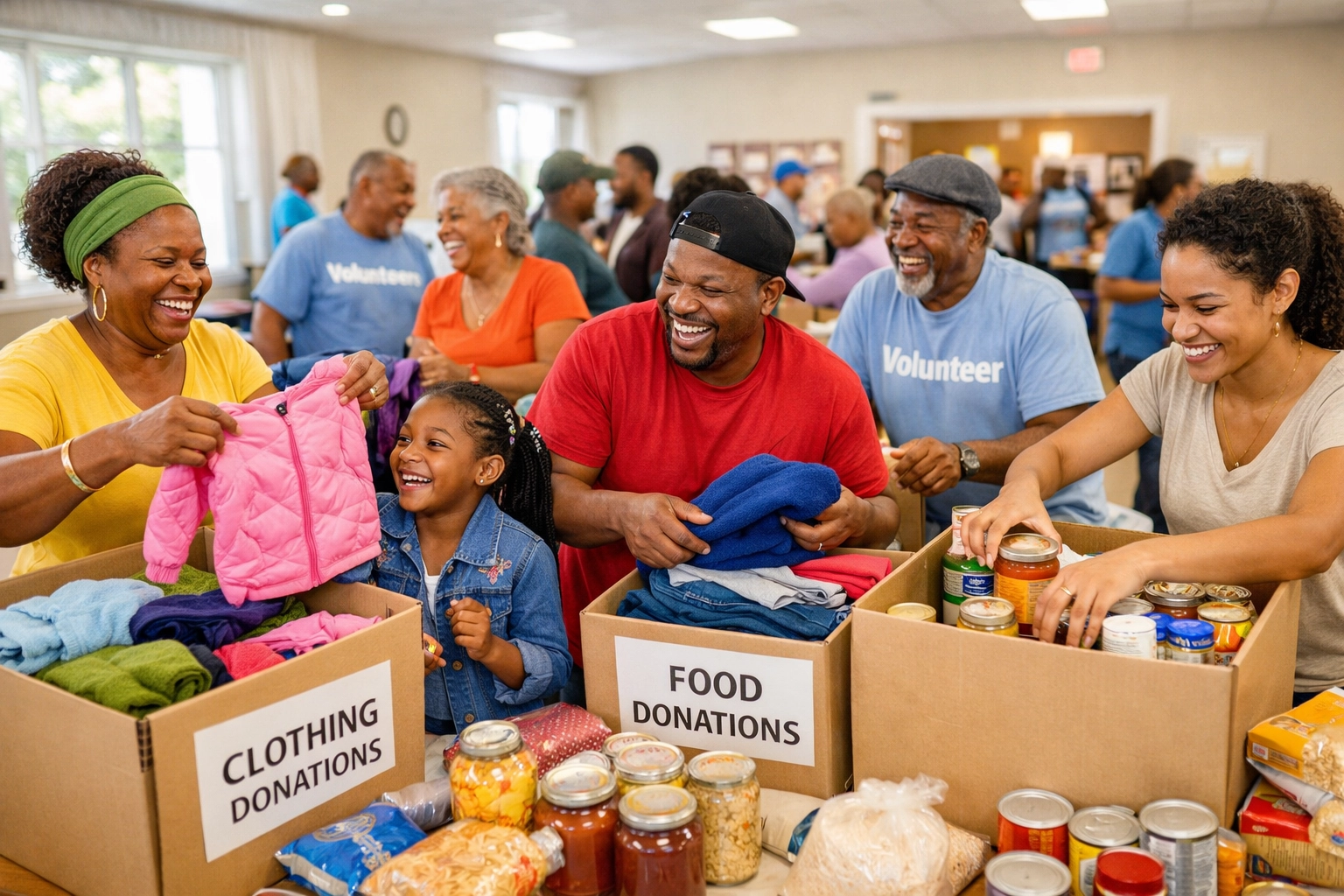
A group of diverse community members, led by a Black woman in a Family ReBuild t-shirt, working together to sort through donated supplies in a bright, clean community hall.
Step 6: Addressing the Emotional Toll
Displacement isn't just about losing a roof over your head; it’s about the loss of your "safe space." It is completely normal to feel overwhelmed, angry, or deeply sad.
We encourage you to lean on your community. Talk to your neighbors. Reach out to your church family. If the weight feels too heavy, use the resources provided by the state for mental health support. Rebuilding a home is a physical process, but rebuilding a life is an emotional one.
At Family ReBuild, we focus on "rebuilding with joy." We recently hosted our 2nd Annual Day Party, because we believe that even in the midst of struggle, there is room for celebration and purpose. We want to help you find that joy again.
Step 7: How to Move Forward
Recovery is a marathon, not a sprint. It might take weeks, months, or even longer to get back to a "new normal."
- Stay Persistent: If FEMA denies your initial claim, appeal it! Many times, a denial is just a request for more information.
- Stay Connected: Keep checking familyrebuild.org for updates and resources.
- Ask for Help: There is no shame in needing support. We are a community because we are stronger together.

A joyful Black family, mother, father, and two children, standing in front of their newly repaired front door, holding a "Home Sweet Home" sign and smiling brightly.
Let’s Rebuild Together
If you’re feeling lost today, please take a deep breath. You’ve already taken a great first step by looking for information. Our South Jersey community is here to wrap its arms around you.
Whether you need help navigating the system or you’re in a place where you want to help others who are struggling, we invite you to join us. Your presence makes our community stronger, and your recovery is our priority.
Remember, 100% of our effort goes into ensuring our neighbors have the support they need to move from crisis to confidence. We are so proud of the resilience of our South Jersey families, and we are honored to walk this path with you.
Ready to take the next step?
- Visit our homepage to learn more about our current projects.
- Follow our latest updates for community events.
- Reach out to us directly if you need guidance on where to turn next.
We are in this together, South Jersey. Let’s get to work rebuilding.
